

Jimoh’s Tonic: There is no such thing as a difficult person, there are just people we need to learn how to deal with.

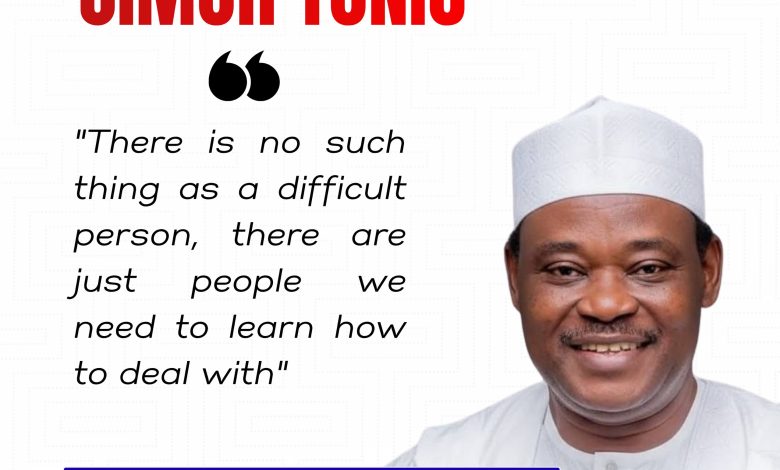
In a powerful message shared by His Excellency Amb ( Mr) Jimoh Ibrahim,PhD, CFR, the profound insight rings true: “There is no such thing as a difficult person, there are just people we need to learn how to deal with.” This simple yet transformative statement challenges us to shift our perspective from frustration and blame to understanding and empowerment. It reminds us that interpersonal challenges are not insurmountable obstacles but opportunities for growth, resilience, and better relationships in both our personal and professional lives.
Chapter One of Roy Lilley’s Dealing with Difficult People serves as a foundational “short course in human relations,” urging us to begin with self-reflection before pointing fingers outward. It poses a direct question: “Difficult, who me?” This encourages us to examine our own behavior first. Are we the one out of step? The truth is, nice people are not always like us. Others come from different backgrounds, educations, perspectives, and ambitions. They think and are motivated differently and they can still be good people. This realization fosters humility and empathy, motivating us to approach interactions with openness rather than judgment.
The brutal truth, as Lilley puts it, is that most people don’t care about you as much as you might think and difficult ones care even less. This detachment is liberating. It frees you from emotional hooks and allows you to respond thoughtfully instead of reacting defensively. By internalizing this, you build emotional resilience that turns potential conflicts into manageable moments.
Preparation emerges as a key strategy for success. Before any encounter, ask yourself: What do I want to get out of this? Decide in advance the purpose, the key results you seek, and whether you need to adjust your own behavior. This proactive mindset shifts you from victimhood to leadership in the interaction. It doesn’t mean tolerating rudeness, but it prevents unnecessary battles. A practical tip: When faced with a rude remark, calmly ask for clarification “I’m not sure quite what you meant by that. Can you explain it to me please?” which often de-escalates the situation while keeping your dignity intact.
The chapter reinforces predictability as an ally. Difficult people are predictable people. Once you recognize patterns, you can prepare, plan, and navigate interactions more effectively. Rather than trying (often futilely) to change others, focus on adapting your approach. This empowers you to influence outcomes positively and even unlock better performance from those around you.
Finally, the flower and soil analogy offers timeless wisdom: If flowers don’t bloom, don’t blame the flower examine the soil, water, or fertilizer. In human relationships, instead of blaming others for difficulties, figure out the underlying reasons and adjust the conditions. Complement this with the hierarchy of important words that build stronger connections: “I admit, I made a mistake” (six most important), down to the least important word, “I.” Prioritizing “we,” gratitude, and others’ opinions creates harmony and mutual respect.
By embracing these lessons from Chapter One, we transform how we view and handle people. What once felt like draining conflicts becomes a pathway to personal mastery, stronger teams, and greater fulfillment. Senator Jimoh Ibrahim’s shared wisdom, rooted in this practical philosophy, calls us to lead with understanding and in doing so, not only deal with people better but inspire those around us to rise as well. Start today: Reflect, prepare, and choose empathy. The results will motivate you to keep growing. You can read and add voltage to your practical wisdom’s current too.
https://joygupta.wordpress.com/wp-content/uploads/2010/10/nn03.pdf. Good morning ❤️🌹❤️
~ Ayochris