
FROM IGBOTAKO TO THE UNITED NATIONS: HOW COMPETENCE FOUND A GLOBAL STAGE Jimoh Ibrahim, Tinubu, and the Diplomacy of Cultural Intelligence

In the often sterile corridors of the United Nations, optics matter. But substance matters more. Over the last few days, Nigeria’s Senator Jimoh Ibrahim, Ph.D, OFR, CFR, has reminded the world that the two can coexist. And when they do, a nation’s image is elevated.
His story begins in Igbotako, a small town in the Ikale nation of Ondo South. A local boy who attended Igbotako Community Grammar School, Jimoh Ibrahim would go on to build a private University in that same town, bringing global academic attention to a community rarely mentioned on world maps. From that humble beginning he rose to rub shoulders with scholars in the best universities on earth. Igbotako is no longer just a dot on the map of Ondo. Through him, it is now a reference point for enterprise and intellectual ambition.
That journey from Igbotako to Turtle Bay, New York, is itself a statement; competence has no zip code.
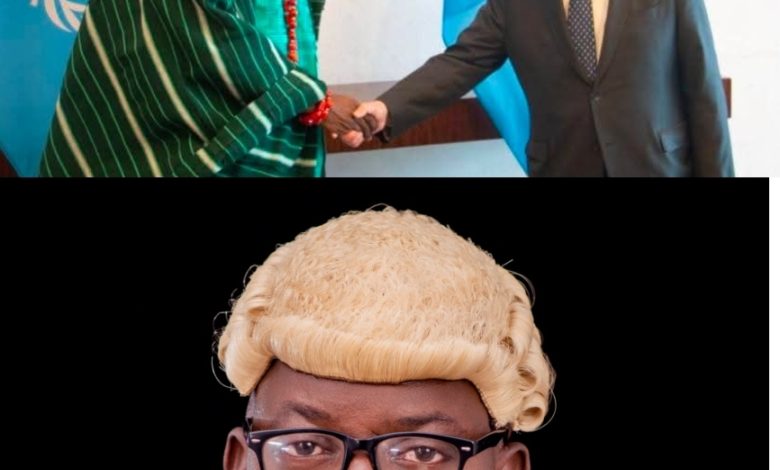
His first act at the UN was cultural. Arriving to present his Letters of Credence to the UN Secretary-General, Senator Ibrahim chose Yoruba traditional attire. Days later, he wore the same cultural signature to the Africa Day celebration at UN Headquarters. In a multilateral space dominated by Western suits and diplomatic uniformity, that choice was not vanity. It was strategy.
Culture became his opening statement. He told the world that Nigeria does not arrive at global tables asking to be assimilated. Nigeria arrives fully formed, proud, and ready to contribute.
The effect was immediate. Ambassadors from across continents began to seek him out. Within days, Senator Ibrahim had become what diplomats call “the African microphone”; the delegate other African missions looked to for framing positions during the Africa Day event.
When you are new to a posting but peers already treat you as a convener, that is not accident. That is presence, preparation, and intellectual weight.
The capstone came last week. Dr. Jimoh Ibrahim’s election as Chairman of the Budget Committee for the 5th Assembly of the United Nations. The Budget Committee is not ceremonial. It is the financial spine of the UN system, reviewing, interrogating, and approving expenditures that run into billions of dollars. To chair it, weeks into a posting, is a statement by the global community: “We trust your grasp of numbers, your discipline, and your capacity for consensus.”
Congratulations poured in from across the world. President Bola Ahmed Tinubu, GCFR, led the commendations from Nigeria. That endorsement matters because it tells a larger story about leadership.
Tinubu and the Recruitment of Capacity
President Tinubu’s praise of Senator Ibrahim is not just courtesy. It is continuity. It is the same philosophy that has defined his political life: recruit competence, even when the path to it is complicated.
That philosophy built modern Lagos. From Babatunde Raji Fashola, SAN, who redefined infrastructure governance, to Akinwunmi Ambode who expanded the state’s fiscal base, to Babajide Sanwo-Olu who stabilized it through crisis, to Femi Gbajabiamila who reformed the legislature, and to Bosun Tijani, BTO, now driving digital innovation in the Interior Ministry. Tinubu has consistently identified and groomed talent. His eye is not limited to those close to him. He has also recruited capacity across party lines and past disagreements; Nyesom Wike, whose administrative grit he values, David Umahi, whose engineering discipline he trusts, and Taiwo Oyedele, whose tax reform intellect he placed at the centre of national fiscal redesign and currently places at the head of Ministry of Finance. That is the Tinubu model; value over vendetta.
Recall 2023. Jimoh Ibrahim was the most visible campaigner for Senator Abdul’aziz Yari in the contest for Senate President, a position where the President had an “unambiguous” preferred candidate Godswill Akpabio. In Nigeria’s winner-takes-all politics, that is usually career suicide. Yet Senator Ibrahim did not retreat after the contest. He moved on, ran for governor of Ondo State, and when the primary produced disputed results, he approached the courts with evidence he believed was unassailable. The matter threatened to become another Zamfara episode, a party fracturing in court over internal process.
It was President Tinubu who intervened. He asked Jimoh Ibrahim to accept the outcome, to place party stability and Ondo’s peace above personal grievance. Senator Ibrahim complied. That moment could have ended his relevance. Instead, it became the bridge to a larger assignment.
Today, the man who once contested his party’s zoning is now chairing the budget of the world’s most important multilateral institution. That arc is instructive.
It reveals a leader who does not weaponize disagreement. President Tinubu does not “find faults” as a sport. He identifies value. He understands that intellectual capacity and political courage are not diminished because a man once stood on the other side of an argument. In fact, those are often the qualities you want representing you where hard decisions are made.
The UN Budget Committee will demand exactly that. The courage to question line items, the intellect to see fiscal implications, and the negotiation skill to build consensus among 193 member states.
Why This Matters for Nigeria’s Image Abroad
International reputation is not built by press releases. It is built by moments. A Nigerian senator arriving at the UN in Aso Oke, commanding respect from African peers within days, and then chairing the budget of the institution. That is soft power in motion. It counters stereotypes. It tells investors, scholars, and diplomats that Nigeria produces men and women who can walk into any room and lead.
Senator Ibrahim’s early days at the UN are therefore more than personal triumph. They are national assets. They show that Nigeria’s political system, for all its imperfections, can still recruit, correct, and redeploy talent to global advantage. That is the quiet power of President Tinubu’s “large heart”. That is, the ability to see beyond the last disagreement and ask: “Where can this man serve Nigeria best right now?”
The answer, it appears, is at the heart of the United Nations budget process, wearing Yoruba attire, speaking for Africa, and proving that competence, once recognized, will always find a stage large enough for it.
Oloroogun Sola Ajisafe is a public affairs analyst based in Akure, Ondo State.