
Adebare and the Alchemy of Governance: Turning Public Office into People’s Opportunity Through the Currency of Impact


There is an old lesson in the wisdom of our forefathers that a man who inherits a fertile farm but leaves it uncultivated cannot blame the soil when hunger comes knocking. The land may be rich, the rain may fall in season, and the seeds may be available, but until somebody bends his back to work the earth, the promise of a harvest remains a dream. Even when the first green shoots appear, the farmer must continue to weed, water and protect the crops; otherwise, the farm that once promised abundance may become a wilderness of wasted opportunity. In the end, the worth of a farmer is not measured by the size of the land he possesses, but by the harvest his labour brings home.
Such is the nature of public office. Authority is the farmland, public resources are the seeds, and governance is the labour that determines whether the people will enjoy a harvest or inherit another season of unfulfilled promises. A political title may open the gate, but only purposeful action can turn the land into a source of nourishment. The officeholder who understands this distinction knows that leadership is not a personal trophy to be displayed but a public trust to be converted into opportunities for others.

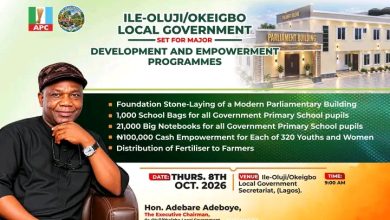
This is the lens through which the administration of Hon. Adeboye Adebare, Executive Chairman of Ile-Oluji/Okeigbo Local Government, can be examined. His administration’s reported initiatives in education, youth and women’s empowerment, agriculture and infrastructure illustrate the different ways local governance can touch ordinary lives. The distribution of 1,000 school bags and 21,000 notebooks to pupils in government primary schools speaks to the needs of families struggling with the cost of education. The planned ₦100,000 empowerment support for eligible youths and women offers a measure of financial assistance to beneficiaries seeking to improve their livelihoods, while fertiliser distribution addresses the needs of farmers whose productivity matters to the wider local economy.

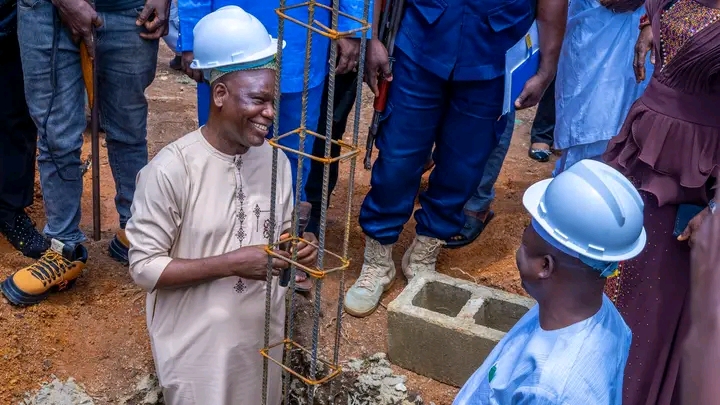
The laying of the foundation stone for a modern parliamentary building at the local government secretariat adds an institutional dimension to these initiatives. Together with other reported interventions around public facilities and community needs, these efforts raise an important question: how can the instruments of local government be transformed into practical opportunities for the people? The answer lies not in ceremonies alone, but in implementation, fairness, continuity and the willingness to measure success by results.

The farmer in our story does not celebrate merely because the seed has entered the soil. He waits for the crop to mature, protects it from destruction and eventually gathers the harvest. In the same way, the true value of empowerment will be seen in livelihoods strengthened, educational support reaching its intended recipients, farmers benefiting from agricultural inputs and infrastructure projects progressing from foundation stones to completed facilities. This is where the currency of impact acquires its real value.

Ultimately, Adebare’s responsibility is to ensure that the seeds of public intervention produce a harvest that residents across the ten wards can recognise in their daily lives. The enduring test of governance is not how loudly a programme is announced, but how deeply its benefits take root in the community. Public office provides the farmland; purposeful leadership does the cultivation; and the people’s improved circumstances constitute the harvest.Why this works: The farming story supplies a unifying metaphor for the entire essay. It connects naturally with Adebare’s education support, empowerment programme, agricultural assistance and infrastructure initiatives without making the article sound like a list of achievements.